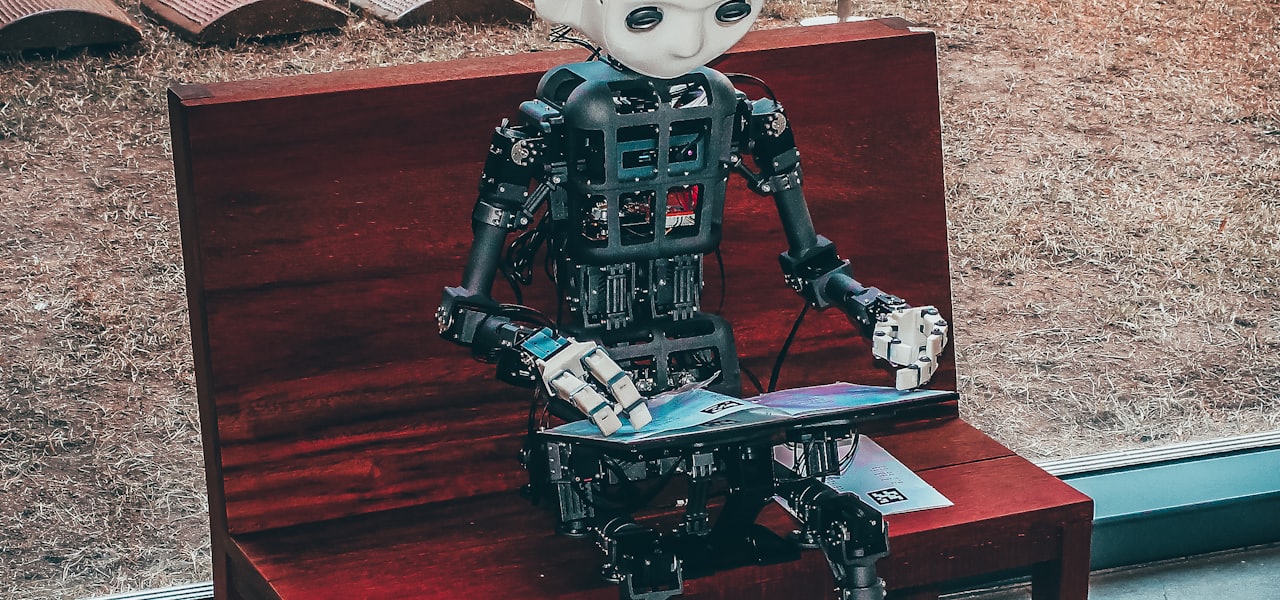
"Iron Man 2020" is a storyline published by Marvel Comics in 2020 which follows the character Arno Stark as he attempts to take over Stark Industries and the mantle of his estranged brother Tony Stark (Iron Man). The crossover characters of two different brands meeting up in one storyline received mixed reviews from critics. == Publication history == Marvel Comics released the teaser for the event at New York Comic Con in November 2019. It was also alluded to in December 2019's Incoming! In the original checklist released for the event, 2020 Force Works was originally titled Force Works 2020, while 2020 Machine Man was previously named Machine Man 2020, and so on. Additionally, 2020 Wolverine was going to be called Weapon.EXE 2020. The publication of this event was intended to span from January to June 2020, however, due to the COVID-19 pandemic, Diamond Comic Distributors suspended the distribution of new print titles between April 1 and May 27, which also caused digital releases by Marvel Entertainment to be postponed. The rescheduling of the postponed issues to new dates pushed the event's conclusion to August, and certain issues, namely 2020 Force Works #3 and 2020 Ironheart #1–2, were released exclusively in a digital format. == Main plot == Arno Stark wakes up from a nightmare involving the Extinction Entity, a monstrous amalgamation of alien and machine. He dreams that the Extinction Entity is going to come to Earth in a matter of weeks and create an artificial intelligence (A.I.) army to consume humanity. After eating breakfast with duplicates of Howard Stark and Maria Stark, Arno suits up as Iron Man and saves a construction worker from a hostage situation involving several Nick Fury Life Model Decoys, which represent the A.I. army trying to liberate construction robots. Over different news outlets, the media wonders about the whereabouts of Tony Stark, who declared himself as nothing more than a simulation of the real, late Tony Stark. At the A.I. army's base, Machine Man is commanding the robots' moves when Arno appears, having planned for the A.I. army's leader to show himself. Machine Man activates the bomb, forcing Arno to fly it away so it explodes somewhere safe while he escapes. Machine Man reaches the Thirteenth Floor, a dimensional-shunted plane of existence made of solid light, and a haven for robotkind that humans cannot access or comprehend. Aaron meets with the leader of the A.I. army and creator of Thirteenth Floor: Tony Stark -- who is now going by the name Mark One, having embraced his nature as artificial intelligence. Also in the A.I. army are Albert, Awesome Android, H.E.R.B.I.E., Machinesmith, and Quasimodo. The A.I. army continues its efforts to liberate artificial life forms by raiding places where robots are being subjugated. Iron Man intercepts an attack on a Futura Motors testing site by Quasimodo and H.E.R.B.I.E. and manages to recover an Un-Inhibitor allowing him to take control of all A.I.s. On the Thirteenth Floor, Mark One receives a transmission from a mole inside Baintronics -- codenamed Ghost in the Machine --revealing that Arno used the submission code on Jocasta, who received a new body, making her entirely compliant. Stark plans to upload the submission code to the internet to instantly infect robots. With only three hours before the code is transmitted to Stark Unlimited's satellite network, Mark One devises a heist on Bain Tower to tamper with the code before launch. Having discovered the secret behind the Thirteenth Floor, Arno shuts out the A.I. army, uses Jocasta to lure Machine Man away from the tower, infects Machinesmith with the submission code, and confronts Mark One. H.E.R.B.I.E., Awesome Android, and Machinesmith escape from Bain Tower and call for help to every robot in New York City. Mark One is left to fight Iron Man and is defeated. Meanwhile, Sunset Bain confronts and fires Andy Bhang under the accusation of working as a mole inside Stark Unlimited and feeding Bethany Cabe information to relay to the A.I. army. Arno takes Mark One inside Bain Tower to meet Howard and Maria Stark and asks Tony to join him, but he refuses and dismisses his rationale as lunacy. The robotic mob assembled by Machine Man reaches Bain Tower, giving Mark a distraction which allows him to fly off and disable the transmission dish from which Arno intends to broadcast the obedience O.S. to subjugate every robot. Tony manages to stop the upload and make the antenna unusable. In retaliation, Arno fires all of his armor's firepower at Tony as he falls to the ground. Tony Stark's remaining allies escape with his body as Arno attacks the robot protesters. Tony wakes up inside the Thirteenth Floor and is greeted by F.R.I.D.A.Y., who had plucked Tony's consciousness from his body during his fall. In the streets, Arno Stark tracks down Howard and Maria, who die from an illness inherited from Arno. When Sunset Bain objects to Arno creating new bodies for his parents and trying to control people, he reveals she is an A.I., a duplicate of the real Bain whom Arno replaced back when she solicited him to heal a scar on her face. He makes new bodies for Howard and Maria by recreating the Arsenal and Mistress bodies from the eScape. After learning of Arno's new plan, Dr. Shapiro (who is the actual mole) sneaks into a computer and warns F.R.I.D.A.Y. about it. When F.R.I.D.A.Y. relays that only Tony Stark can stop Arno, Tony insists that he is not the real Tony Stark, but is confronted by holographic manifestations of himself in different points of his life, until they all merge into him and he acknowledges that he has always been Tony. As Arno Stark sets off to the Stark Space Station to install his mind-controlling device to enslave all of humanity, Tony Stark's allies assault the Stark Unlimited HQ, confronting Sunset Bain's duplicate and Arno's Iron Legion. Jocasta uploads a submission code to Bain and they place Tony's body inside a bio-pod that restores his body to normalcy, uploads his consciousness back into his body. Using the Thirteenth Floor's access mechanisms, Tony and his allies reach the Stark Space Station from one of the elevators within. Employing his new Virtual Armor, Tony defeats Arno in combat. When Arno prepares to activate his mind-controlling device, the Extinction Entity suddenly appears. Arno ultimately defeats the Extinction Entity by willingly assimilating with it, causing it to explode. The entity is revealed to be a delusion caused by Arno's terminal disease, of which he would die by the end of 2020. Unable to stop Arno, Tony placed him in a simulation where he successfully stopped the entity. Afterwards, Jocasta uses the submission code to force Sunset Bain's duplicate to confess all of Baintronics' crimes, also claiming responsibility for tricking Tony into thinking he was an artificial intelligence and pulling the strings of the A.I. Army, putting an end to the robot revolution. Tony gives up Stark Unlimited to Bhang Robotics and he flies off in a new armor, reasserting himself as Iron Man. == Issues involved == === Main issues === Iron Man 2020 (vol. 2) #1–6 === Tie-In issues === 2020 Force Works #1–3 2020 Iron Age #1 2020 Ironheart #1–2 2020 Machine Man #1–2 2020 Rescue #1–2 2020 iWolverine #1–2 == Critical reception == According to Comic Book Roundup, the entire crossover received an average score of 6.4 out of 10 based on 36 reviews. William Tucker from ButWhyTho Podcast stated "Iron Man 2020 #6 is an initially exciting end to a great event that eventually feels deflated. There is absolutely nothing wrong with the art, Woods has been incredible throughout, but the ending that Slott and Gage chose to round out an epic tale like this left me feeling cold. And while there were loads of enjoyable cameos, their involvement ultimately didn't seem important to the story as a whole. Which is disappointing, as the rest of the event really was a fun and exciting ride." Anthony Wendel from MonkeysFightingRobots wrote "The 2020 event seems like it is taking some big risk, and it doesn't inspire a lot of confidence from the start. Iron Man 2020 #1 has set the stakes and shown some very intense players on both sides of the board. Sadly, if it doesn't unfold just the right way, many may feel cheated about defending the path characters are taking." == Collected editions ==
Avid Symphony
Avid Symphony is non-linear editing software aimed at professionals in the film and television industry. It is available for Microsoft Windows PCs and Apple Macintosh platforms. Symphony is Avid's high end SD/HD finishing platform for long form work, such as documentary and episodic TV. Its interface is based on the same look and feature set as the Media Composer and Xpress systems, but contains the highest level of features and resolution including secondary color correction, uncompressed HD, and higher real-time performance. == Release history == Symphony is the software component of a tightly integrated package that includes specific hardware audio/video interfaces, storage, and the computer, also sold by Avid. Its release history is therefore tightly related to the release of new Avid interface hardware: Symphony was introduced to the market in 1998. It was based on Avid's Meridien hardware, supporting SD only, and was available first only for the PC and later for the Macintosh platforms. Its last release was 5.0.5 which supported Windows 2000 and Mac OS X v10.2. The next major upgrade was Symphony Nitris in 2005, with a redesigned software and integration with the Nitris DNA hardware (PCI-X). It supported 8 bit and 10 bit SD and HD resolutions in both compressed and uncompressed forms, the MXF format and DNxHD codec, and ran only on Windows PC platforms. Symphony Nitris DX, released in 2008, added support for a range of HD codecs, including HDV, XDCAM-HD, DVCPRO HD, and AVC-I, and brought back Mac OS support for OS X 10.5, as well as Windows Vista. Since the introduction of Symphony 6, it can be used in software-only mode (where a Nitris or Nitris DX BOB used to be required), and at the same time, like Media Composer, Symphony was opened up with "Open I/O", allowing users to have Symphony use their third party hardware from companies like AJA, Matrox, BlueFish, Blackmagic Design and MOTU. The last remaining features that differentiate it from Media Composer are Advanced Color Correction (channels, secondary color correction,), Relational Color Correction (corrections based on common clip name, tape name, program track) and Universal HD Mastering (only with Nitris DX hardware). The latter allows cross-conversions of 23.976p or 24p projects sequences to most any other format during Digital Cut. In 2013, Avid announced it would no longer offer Symphony a standalone product. Starting version 7, Symphony will be sold as an option to Media Composer. This optional package (sold at a premium) will contain all the traditional Symphony-only features to any Media Composer install. == Use in movies == The Celibacy, Director: Horacio Bocaranda Avid Media Composer 6 and Avid Symphony 6 Nitris DX American Hardcore, Director: Paul Rachman Avid Xpress Pro and Symphony Summercamp!, Director: Spike Lee Avid Xpress Pro and Symphony When the Levees Broke Avid Media Composer and Symphony Nitris Superman Returns Edited with Mac-based Film Composer XL, but HD screenings prepped with Symphony
AgMES
The AgMES (Agricultural Metadata Element set) initiative was developed by the Food and Agriculture Organization (FAO) of the United Nations and aims to encompass issues of semantic standards in the domain of agriculture with respect to description, resource discovery, interoperability, and data exchange for different types of information resources. There are numerous other metadata schemas for different types of information resources. The following list contains a list of a few examples: Document-like Information Objects (DLIOs): Dublin Core, Agricultural Metadata Element Set (AgMES) Events: VCalendar Geographic and Regional Information: Geographic information—Metadata ISO/IEC 11179 Standards Persons: Friend-of-a-friend (FOAF), vCard Plant Production and Protection: Darwin Core (1.0 and 2.0) (DwC) AgMES as a namespace is designed to include agriculture specific extensions for terms and refinements from established standard metadata namespaces like Dublin Core, AGLS etc. Thus, to be used for Document-like Information Objects, for example like publications, articles, books, web sites, papers, etc., it will have to be used in conjunction with the standard namespaces mentioned before. The AgMES initiative strives to achieve improved interoperability between information resources in agricultural domain by enabling means for exchange of information. Describing a DLIO with AgMES means exposing its major characteristics and contents in a standard way that can be reused easily in any information system. The more institutions and organizations in the agricultural domain that use AgMES to describe their DLIOs, the easier it will be to interchange data in between information systems like digital libraries and other repositories of agricultural information. == Use of AgMES == Metadata on agricultural Document-like Information Objects (DLIOs) can be created and stored in various formats: embedded in a web site (in the manner as with the HTML meta tag) in a separate metadata database in an XML file in an RDF file AgMES defines elements that can be used to describe a DLIO that can be used together with other metadata standards such as the Dublin Core, the Australian Government Locator Service. A complete list of all elements, refinements and schemes endorsed by AgMES is available from the AgMES website. === Creating application profiles === Application profiles are defined as schemas which consist of data elements drawn from one or more namespaces, combined by implementers, and optimized for a particular local application. Application profiles share the following four characteristics: They draw upon existing pool of metadata definition standards to extract suitable application- or requirement oriented elements. An application profile cannot create new elements. Application profiles specify the application specific details such as the schemes or controlled vocabularies. An application profile also contains information such as the format for the element value, cardinality or data type. Lastly, an application profile can refine standardized definitions as long as it is "semantically narrower or more specific". This capability of application profiles caters to situations where a domain specific terminology is needed to replace a more general one. === Sample application profiles using AgMES === The AGRIS Application Profile is a standard created specifically to enhance the description, exchange and subsequent retrieval of agricultural Document-like Information Objects (DLIOs). It is a format that allows sharing of information across dispersed bibliographic systems and is based on well-known and accepted metadata standards. The Event Application Profile is a standard created to allow members of the Agricultural community to 'know' about an upcoming event and guide them to the event Web site where they can find further information. The information communicated is thus minimum yet interoperable across domains and organizations. == AgMES and the semantic web == One of the advantages of the AgMES metadata schema is the ability to link between the metadata element and controlled vocabularies. The use of controlled vocabulary provides a "known" set of options to the indexer (and the search programmer) as to how the field can be filled out. Often the values may come from a specific thesaurus (e.g. AGROVOC) or classification schemes (e.g. the AGRIS/CARIS classification scheme) etc. Thanks to the possibility to use controlled vocabularies for metadata elements, the user is provided with the most precise information. In this context, work is also being carried out on exploiting the power of controlled vocabularies expressed as using URIs and machine-understandable semantics. In this context, FAO is promoting the Agricultural Ontology Service (AOS) initiative with the objective of expressing more semantics within the traditional thesaurus AGROVOC and build a Concept Server as a repository from which it will be always possible to extract traditional KOS.
Integrated Operations in the High North
Integrated Operations in the High North (IOHN, IO High North or IO in the High North) is a unique collaboration project that during a four-year period starting May 2008 is working on designing, implementing and testing a Digital Platform for what in the upstream oil and gas industry is called the next or second generation of Integrated Operations. The work on the Digital platform is focussed on capture, transfer and integration of real-time data from the remote production installations to the decision makers. A risk evaluation across the whole chain is also included. The platform is based on open standards and enables a higher degree of interoperability. Requirements for the digital platform come from use cases defined within the Drilling and Completion, Reservoir and Production and Operations and Maintenance domains. The platform will subsequently be demonstrated through pilots within these three domains. The project was a sidecar initiative for Statoil’s Global Operations Data Integration Project. This was part of a very ambitious Master Plan IT (MapIT), which also included the Real Time Visualization (RTV) tender. The RTV tender aimed to be an ontology-aware information workspace for a wide range of disciplines, as per the IO Capability Stack. Additionally, the sidecar project aimed to increase the semantic web knowledge among suppliers in the industry. This new platform is considered an important enabler for safe and sustainable operations in remote, vulnerable and hazardous areas such as the High North, but the technology is clearly also applicable in more general applications. The IOHN project consortium consists of 23 participants, including operators, service providers, software vendors, technology providers, research institutions and universities. In addition, the Norwegian Defence Force is working with the project to resolve common infrastructural and interoperability challenges. The project is managed by Det Norske Veritas (DNV). Nils Sandsmark was the project manager during the initiation and start-up phase. Frédéric Verhelst took over as project manager from the beginning of 2009. Financing comes from the participants and the Research Council of Norway (RCN) for parts of the project (GOICT and AutoConRig). == Participants == The consortium consists of the following 22 participants (in alphabetical order):
4E cognition
4E cognition refers to a group of theories in (the philosophy of) cognitive science that challenge traditional views of the mind as something that happens only inside the brain. The four Es stand for: embodied, meaning that a brain is found in and, more importantly, vitally interconnected with a larger physical/biological body; embedded, which refers to the limitations placed on the body by the external environment and laws of nature; extended, which argues that the mind is supplemented and even enhanced by the exterior world (e.g., writing, a calculator, etc.); and enactive, which is the argument that without dynamic processes, actions that require reactions, the mind would be ineffectual. It could be argued that the four Es are compounding extensions of cognition or the mind, being part of a body that is, in turn, part of an environment which limits it but also allows for certain extensions, all of which require dynamic actions and reactions. == History == Ideas of embodied cognition, or rather the idea that our physical bodies play a crucial role in our decision making, can be traced back as far as Plato's dialogues and Aristotelian thought. It was, however, in the twentieth century that this debate began to resemble the current discussion, fueled by disagreements between cognitivists and behaviourists. Tensions within cognitivism, as well as the increasing popularity of neurobiology, led, on the one side, to a predominant focus on internal, cognitive processes while neglecting environmental factors, which in turn caused a push-back fuelling our modern understanding of embodied cognition. The term 4E cognition is hard to trace back to its first use, however, some sources attribute it to Shaun Gallagher and the conference on 4E cognition he organised in 2007, while others indicate the term to be first used in 2006 at an 'Embodied mind workshop' at Cardiff University that Gallagher attended. Embodiment or embodied cognition arguably presents the bridge between cognitivism and 4E cognition as the embodiment of cognitive function provides the necessary conditions for embeddedness, enactedness, and extendedness to connect to cognition. 4E cognition was and is heavily influenced by phenomenology. The ideas are still rather fragmented in nature due to their four main components, which can not be neatly divided, causing conceptual questions of internal boundary concepts. As a young field, it is held back both by its fragmented nature and a relative lack of critical evaluations. It is important to acknowledge that 4E cognition, though young, is a broad field containing and combining several different theoretical perspectives that conflict with one another to varying degrees. The somewhat convoluted and competing nature of the theories that can be grouped as 4E cognition, as well as the field's relative youth, make it difficult to put together an exhaustive history beyond the history of its four main theoretical pillars: embodiment, embeddedness, extendedness, and enactedness. == Importance and core tenets of 4E == If there are separate theories of cognition (e.g., embodied, extended, etc.), why group them under this umbrella, causing important epistemological and especially ontological dilemmas? Notably, other theories of 'non-traditional' cognition are not included under the 4E umbrella. The four E's in 4E cognition importantly all reject, or at a minimum draw into question, some of the core tenets of traditional cognitivism. Importantly, 4E cognition is seen as deindividualizing cognition to some extent, allowing for a broader examination of the interplay of personal, social, political, and ethical aspects that shape human cognition. This can be compared to advancements in the field of epigenetics, which have allowed for a broader examination of environmental (both natural and social) factors and their influence on what had previously only been subject to genetic theorizing. In a similar vein, 4E cognition might also help ground cognition in evolutionary theory by extending cognition to a biological account subject to development over time by means of evolution. Overall, the importance of the extension that is 4E cognition aims to reexamine ideas of a self-centered view of cognition, advocating for a more holistic approach. Ideally, this would allow us to reconsider ideas of justice and individual rights and responsibilities that take into account a more nuanced understanding of the relations between people and their context, balancing self-agency with factors beyond it. === Conceptual differences from cognitive psychology === According to the traditional teachings of cognitive psychology, cognition is a type of information processing based on representational mental structures. This idea, as the name suggests, was heavily influenced by computer science. In this light, the brain is a kind of central processing unit that organises and directs all else. The classical cognitivist view draws a strong boundary between 'the internal' and 'the external', where cognition is solely a subject of 'the internal' realm. The four E's, however, break down this boundary. Cognition can not reside solely within the confines of our heads if it is also embodied, embedded, enacted, and extended. In a way, 4E cognition is interested in the extracranial processes affecting cognition. == From embodied cognition to 4E cognition == === The strong and the weak view === ==== Embodied cognition ==== Broadly speaking, there is a strong and a weak perspective of embodied cognition in 4E cognition. The weak understanding refers to mental processes being causally dependent on extracranial processes. This essentially means that there is a cause and effect or action-reaction relationship between the mind and the body and its environment, etc. The strong perspective views extracranial processes as a (partial) constitutive aspect of cognition. An example here could be using a calculator to solve math problems. The calculator is not part of your brain or mind, but it supports your cognitive processes. === Extracranial processes: bodily or extrabodily === In addition to the weak and the strong reading of 4E cognition, there is also the distinction between bodily and extrabodily extracranial processes. Bodily extracranial processes refer to processes within the body, e.g., sensory perception. Extrabodily extracranial processes refer to processes outside of the body, like the aforementioned calculator example. === Four claims of embodied cognition === ==== Embedded and extended cognition ==== When combining the weak/strong reading of embodied cognition and bodily/extrabodily extracranial process, four claims about embodied cognition emerge: strongly embodied and bodily processes strongly embodied and extrabodily processes weakly embodied and bodily processes weakly embodied and extrabodily processes The first and third claims signify a strong and a weak reading of embodied cognition in the more classical sense. The second claim fits almost perfectly with embedded cognition. Claim two is most compatible with extended cognition. ==== Enacted cognition ==== Finally, enacted cognition refers to cognition being connected to active interaction between a conscious agent and their environment. Here, too, there can be a weak and a strong reading. == Criticisms == Given the divided nature of the field, much criticism surrounding the lack of unity within the field has emerged. In particular, the claims of embodied cognition centering around the body appear to conflict with the tenets of extended cognition, which also appear to conflict with the body/environment distinction that is central to enactivism. Some theoreticians argue that the umbrella of 4E theories is still lacking a common language that might bridge the gaps between the theories that constitute it. There is also the concern that the grouping of such variable theories results in an important loss of nuance and complexity, which is a part of human cognition. Another concern raised is the "dogma of harmony". The criticism contained there regards the notion that within 4E theorizing, there is generally an optimistic and harmonic expectation of the extension between humans and their technologies, ignoring the possibility of those extensions detracting from cognition in some way rather than adding to it. Recent attempts to incorporate embodied cognitive neuroscience have been argued to hold the potential to resolve internal issues within 4E cognition. Overall, a concern often voiced regarding 4E cognition is that its proponents are at best only vaguely interested in cognition. More broadly, this concern reflects the arguably too distracted nature of this emerging field.
ViBe
ViBe is a background subtraction algorithm which has been presented at the IEEE ICASSP 2009 conference and was refined in later publications. More precisely, it is a software module for extracting background information from moving images. It has been developed by Oliver Barnich and Marc Van Droogenbroeck of the Montefiore Institute, University of Liège, Belgium. ViBe is patented: the patent covers various aspects such as stochastic replacement, spatial diffusion, and non-chronological handling. ViBe is written in the programming language C, and has been implemented on CPU, GPU and FPGA. == Technical description == Source: === Pixel model and classification process === Many advanced techniques are used to provide an estimate of the temporal probability density function (pdf) of a pixel x. ViBe's approach is different, as it imposes the influence of a value in the polychromatic space to be limited to the local neighborhood. In practice, ViBe does not estimate the pdf, but uses a set of previously observed sample values as a pixel model. To classify a value pt(x), it is compared to its closest values among the set of samples. === Model update: Sample values lifespan policy === ViBe ensures a smooth exponentially decaying lifespan for the sample values that constitute the pixel models. This makes ViBe able to successfully deal with concomitant events with a single model of a reasonable size for each pixel. This is achieved by choosing, randomly, which sample to replace when updating a pixel model. Once the sample to be discarded has been chosen, the new value replaces the discarded sample. The pixel model that would result from the update of a given pixel model with a given pixel sample cannot be predicted since the value to be discarded is chosen at random. === Model update: Spatial Consistency === To ensure the spatial consistency of the whole image model and handle practical situations such as small camera movements or slowly evolving background objects, ViBe uses a technique similar to that developed for the updating process in which it chooses at random and update a pixel model in the neighborhood of the current pixel. By denoting NG(x) and p(x) respectively the spatial neighborhood of a pixel x and its value, and assuming that it was decided to update the set of samples of x by inserting p(x), then ViBe also use this value p(x) to update the set of samples of one of the pixels in the neighborhood NG(x), chosen at random. As a result, ViBe is able to produce spatially coherent results directly without the use of any post-processing method. === Model initialization === Although the model could easily recover from any type of initialization, for example by choosing a set of random values, it is convenient to get an accurate background estimate as soon as possible. Ideally a segmentation algorithm would like to be able to segment the video sequences starting from the second frame, the first frame being used to initialize the model. Since no temporal information is available prior to the second frame, ViBe populates the pixel models with values found in the spatial neighborhood of each pixel; more precisely, it initializes the background model with values taken randomly in each pixel neighborhood of the first frame. The background estimate is therefore valid starting from the second frame of a video sequence.
D3web
d3web is a free, open-source platform for knowledge-based systems (expert systems). Its core is written in Java using XML and/or Office-based formats for the knowledge storage. All of its components are distributed under the terms of the Lesser General Public Licence (LGPL). The d3web diagnostic core implements reasoning and persistence components for problem-solving knowledge including decision trees, (heuristic) rules, set-covering models and diagnostic flowcharts. The software can be integrated into foreign applications (embedded or OEM), but a number of off-the-shelf components already exist. == Components == d3web is a component-based software platform providing applications for authoring and using/executing problem-solving knowledge. The following applications are primarily using d3web: KnowWE (Knowledge Wiki Environment): A semantic wiki building on JSPWiki. Problem-solving knowledge can be authored and executed through the wiki interface. Developed knowledge bases can be exported to be used in OEM or embedded reasoners. Additionally, knowledge exchange via OWL ontologies is provided. KnowME (Knowledge Modelling Environment): A rich-client application for the development of d3web knowledge bases. Problem-solving knowledge can be authored and executed within the desktop application. Developed knowledge bases can be used in OEM or embedded reasoners. The software KnowME is no longer under active development. It is replaced by the KnowWE component (see above). Dialog2: A web-based application for demonstrating the capabilities of the d3web core reasoner. The web servlet is based on Java Server Faces. It can be used out of box or as a starting point for own developments for building knowledge-based interview systems. == Application Domains == A number of industrial and academic projects already used or are currently using the d3web platform. The main application domains are: medical diagnosis, documentation, and therapy: technical fault diagnosis monitoring of technical devices. Some applications (both, commercial and free) created using the d3web diagnostic engine: SmartCare(c): a medical closed-loop system for weaning mechanically ventilated patients, created by Dräger SonoConsult Archived 2011-12-16 at the Wayback Machine: a medical support system for evaluating sonographic examinations (German only) eDOC: a web-based system for self-diagnosing various medical issues (German only) == History == The development of d3web originates from the research work of Prof. Dr. Frank Puppe (University Würzburg, Germany) going back to the 1980s, starting with the medical expert systems MED1 and MED2 . Whereas the original systems were focussed on medical diagnosis the applicability of the approach was generalized by the successor D3 . As the predecessors were implemented in the LISP programming language, d3web is a full Java re-implementation.